

Always interested in taking a narrative approach, Sue Stone’s artworks are often connected to subjects found in her own life and environment. Her work weaves together threads of memory and figures from the past or present, linking them with real and imagined journeys.
The stitched surroundings in which Sue carefully places her figures add a hint of mystery or surreal humour. And through her distinctive use of mark-making, free machine embroidery and mixed media, her characters come to life.
Sue’s career as an artist is one of discovery: learning how to harness the expressive potential of thread, experimenting with materials and gradually shaping the unique style that she’s known for. Find out how Sue’s love of textiles developed from an early age and discover her journey to becoming the renowned artist she is today.
Surreal narratives
How would you describe your work?
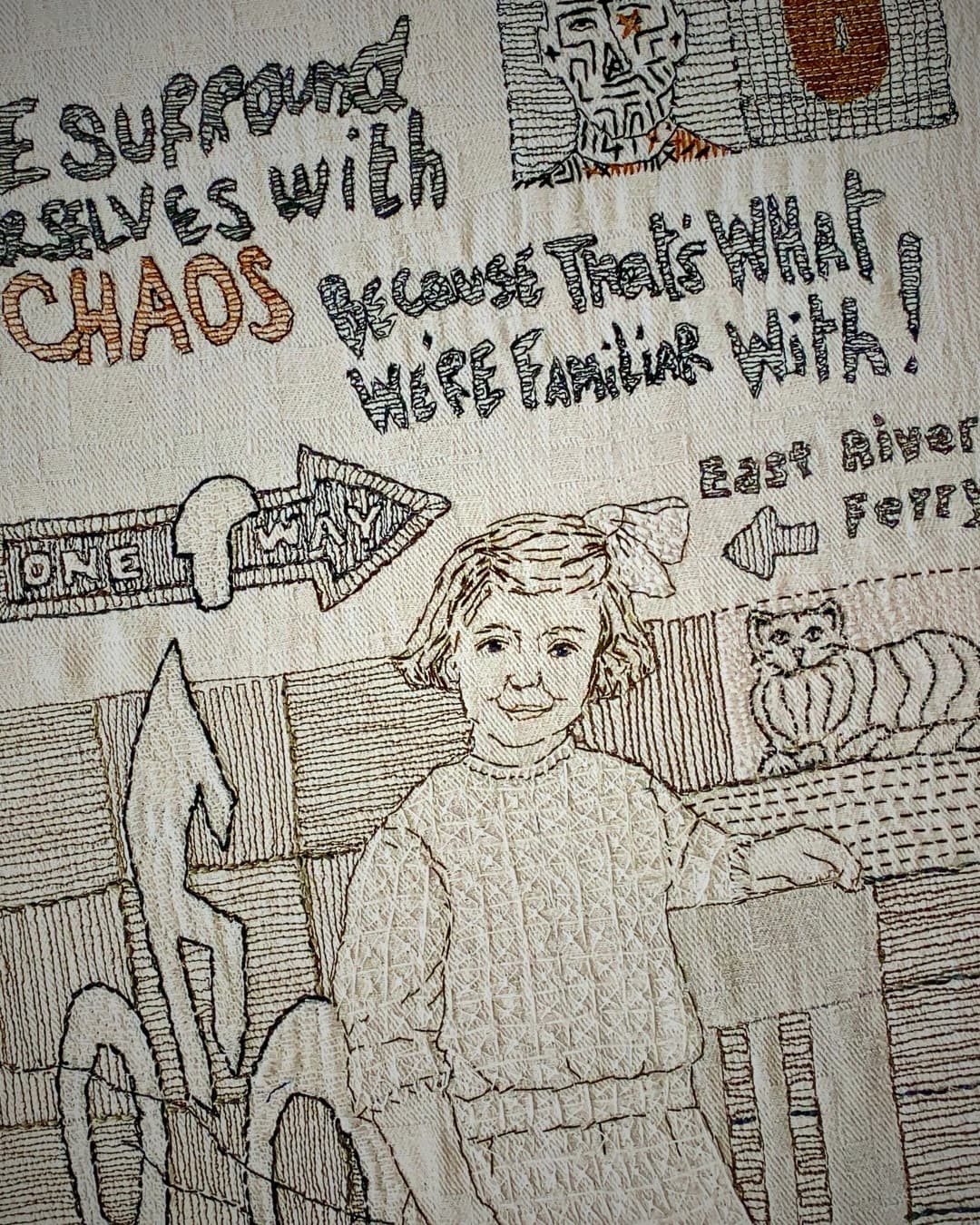
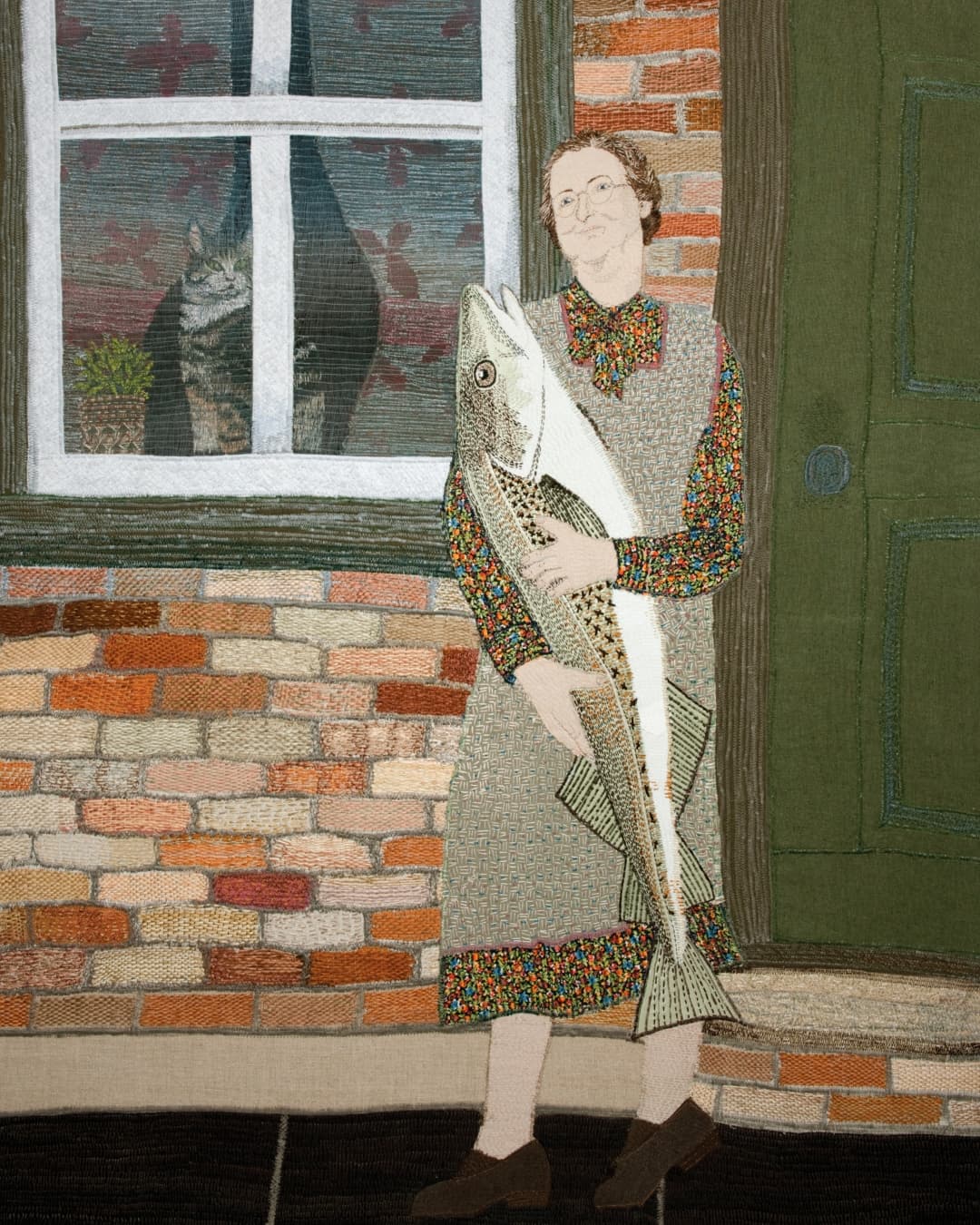
Sue Stone: I am best known for figurative, textural, stitched compositions which often suggest journeys through life, shaped by memory, observation and imagination.
We all need light and shade in our lives, so my work continues to swing from the serious to a slightly surreal sense of humour whenever it needs to.
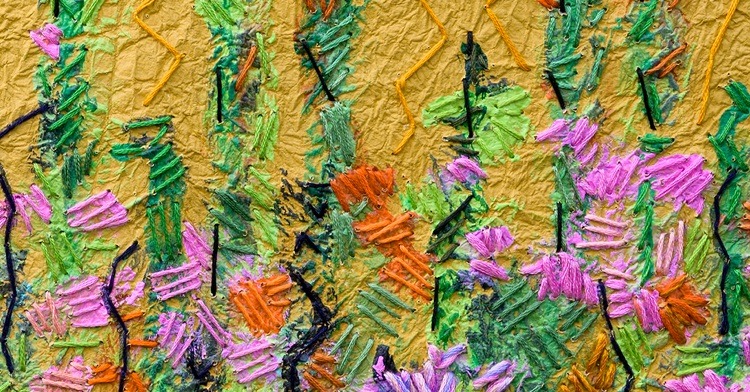
The techniques I use during the making process are straightforward; a deliberately limited colour palette and a small vocabulary of hand embroidery stitches combined with machine stitch, appliqué and sometimes acrylic paint.

Recurring themes
Tell us about the stories behind your work…
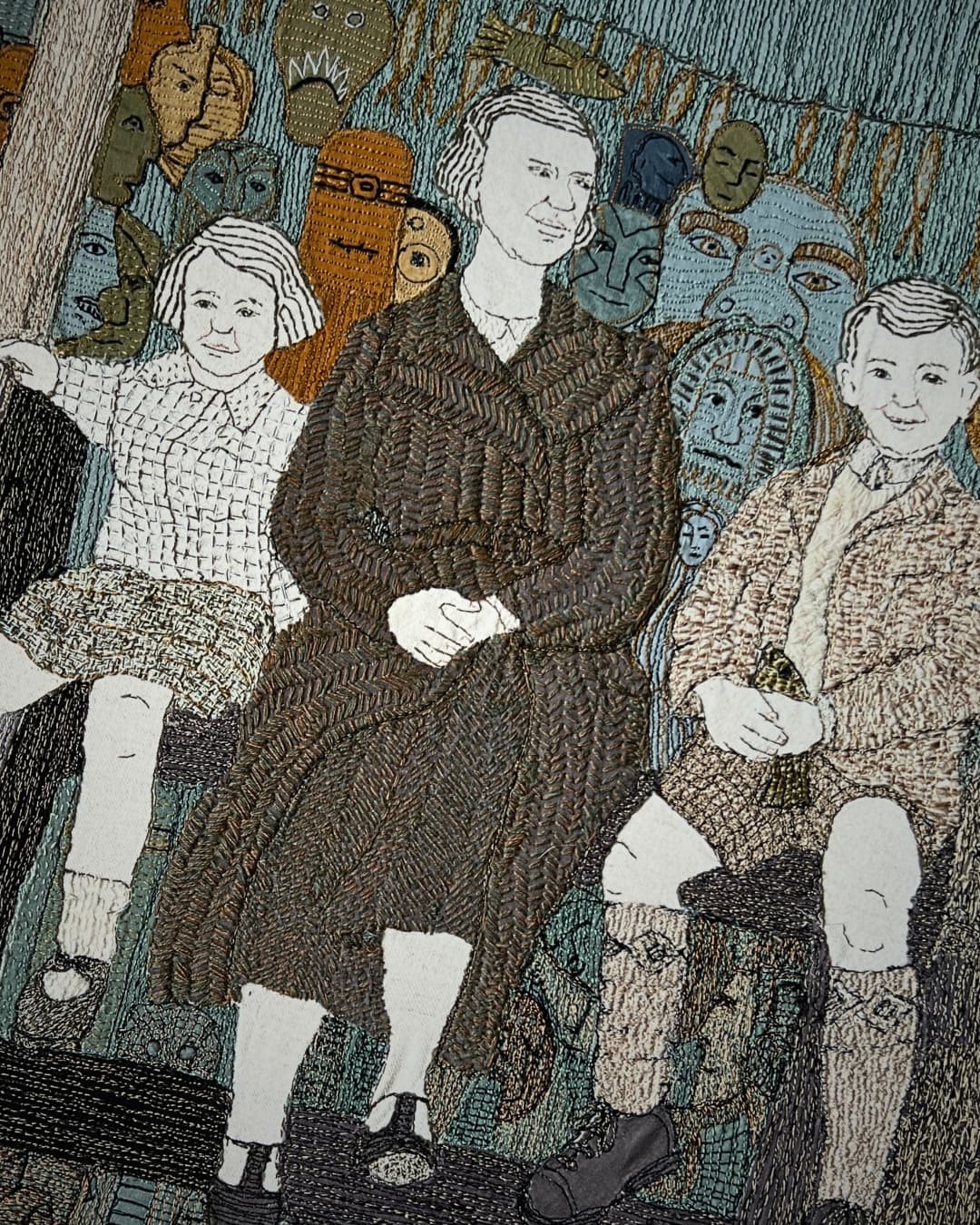
Nearly all my work fits into one of my recurring themes. My two works created for the Broderers’ exhibition The Art of Embroidery, held at Bankside Gallery, London in 2025, hold messages around mental health, the innocent victims of turbulent times and the state of the world today.
I returned to pure hand and machine stitch for these two pieces. The only criterion for the exhibition was to use hand embroidery or machine embroidery or a combination of the two.
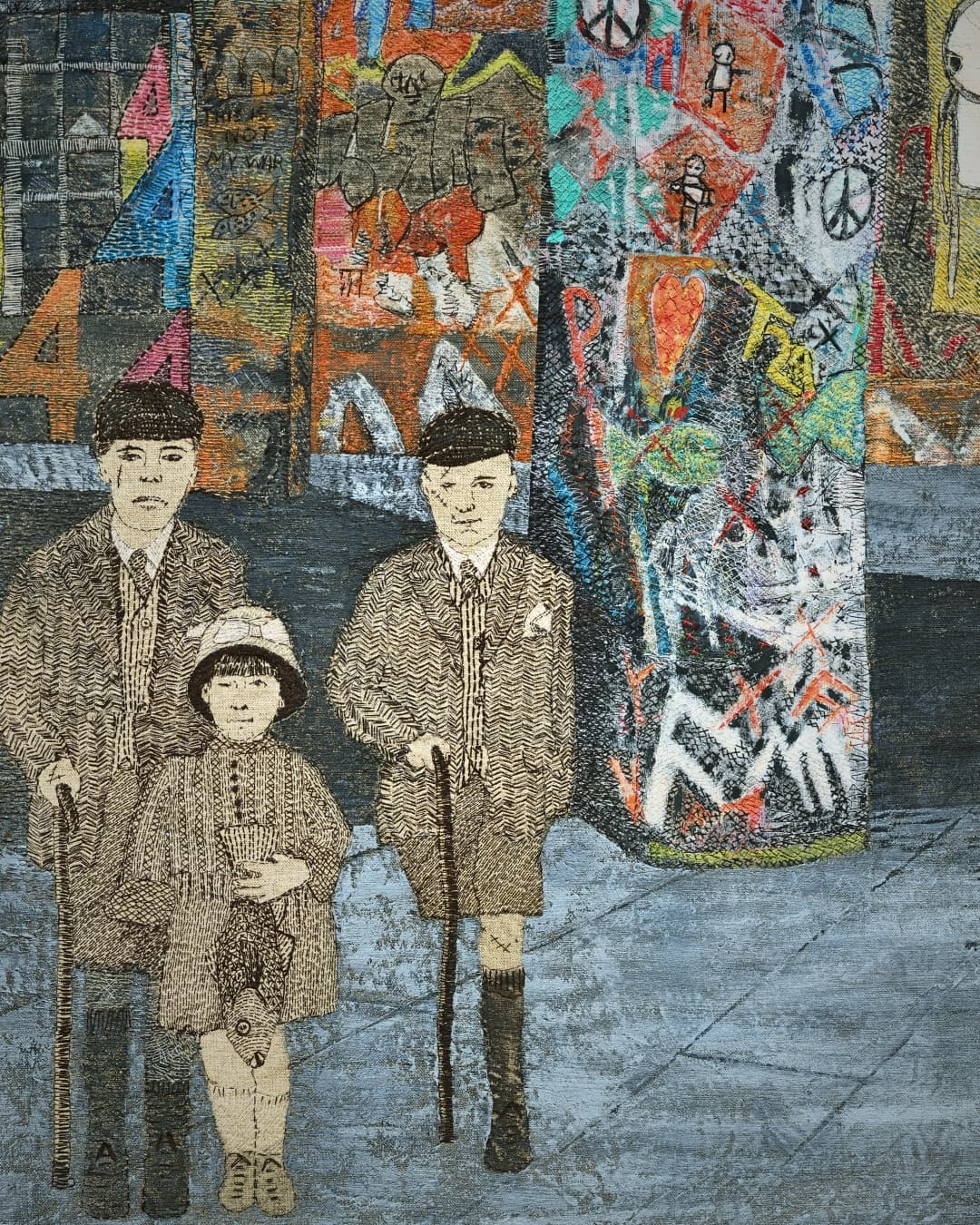
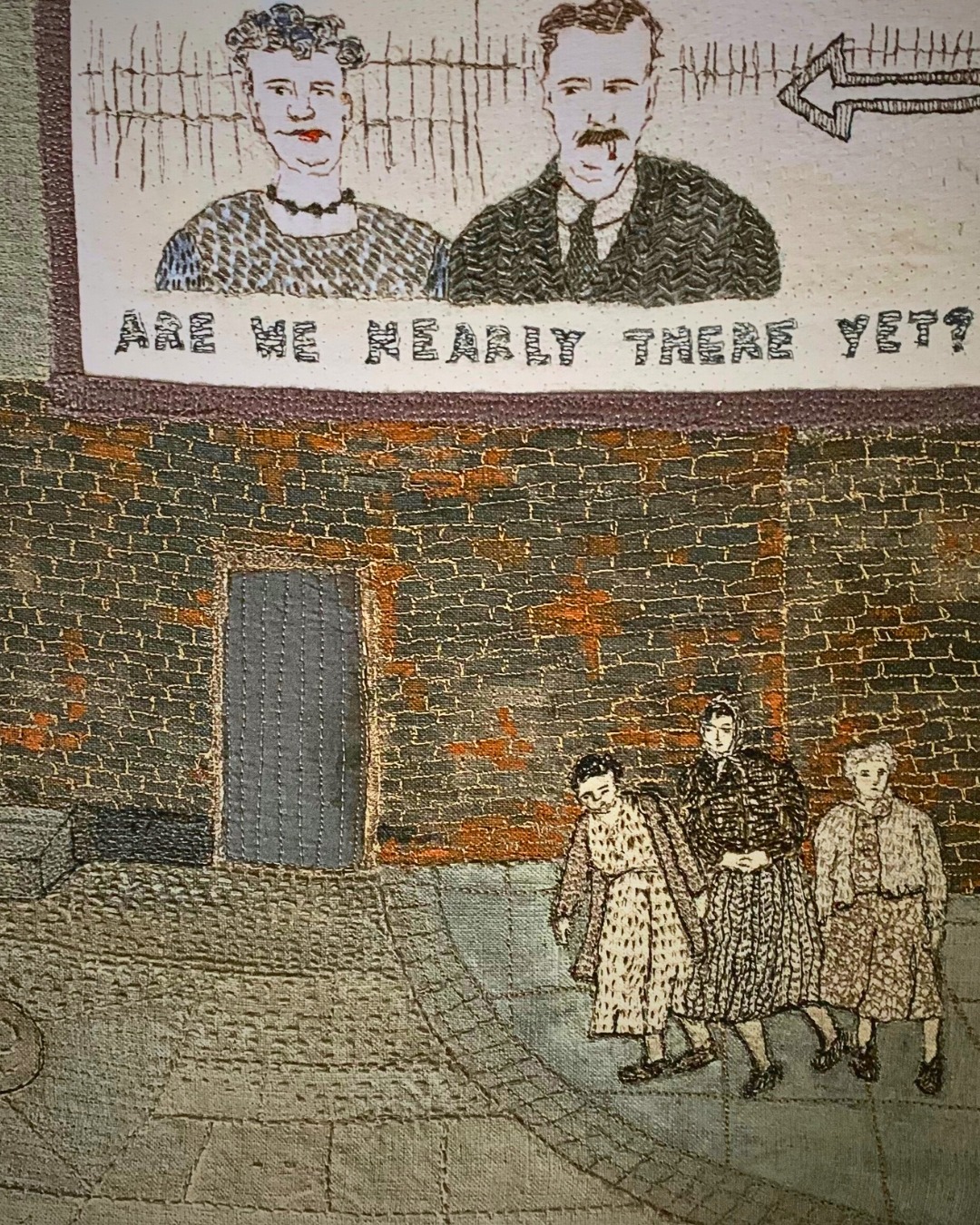
A Glimpse of Calm Amidst the Chaos contrasts a 1940s family’s air of innocence with the turmoil around them. The work invites viewers to consider how much – or how little – the world has truly changed between the 1940s and the present day.
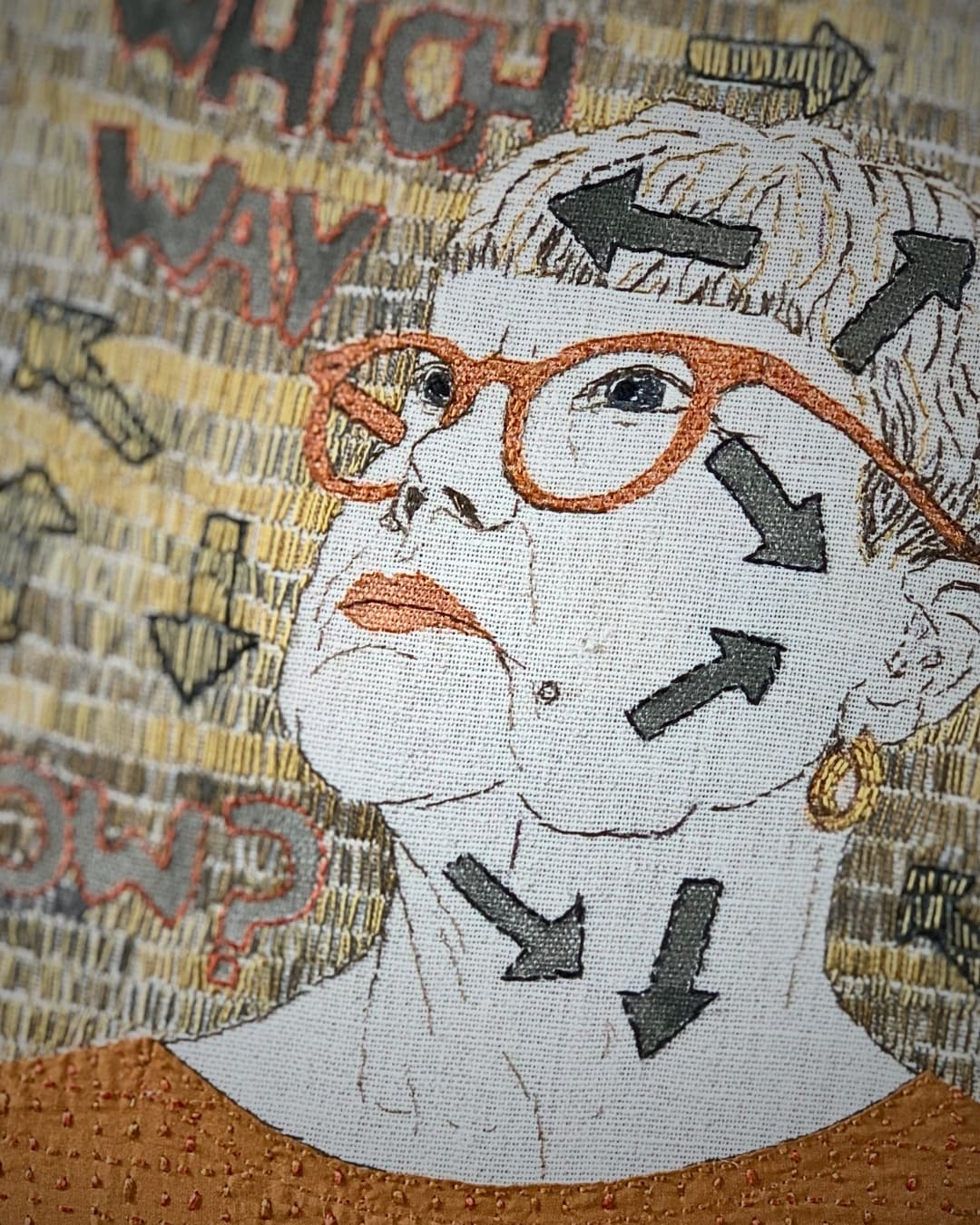
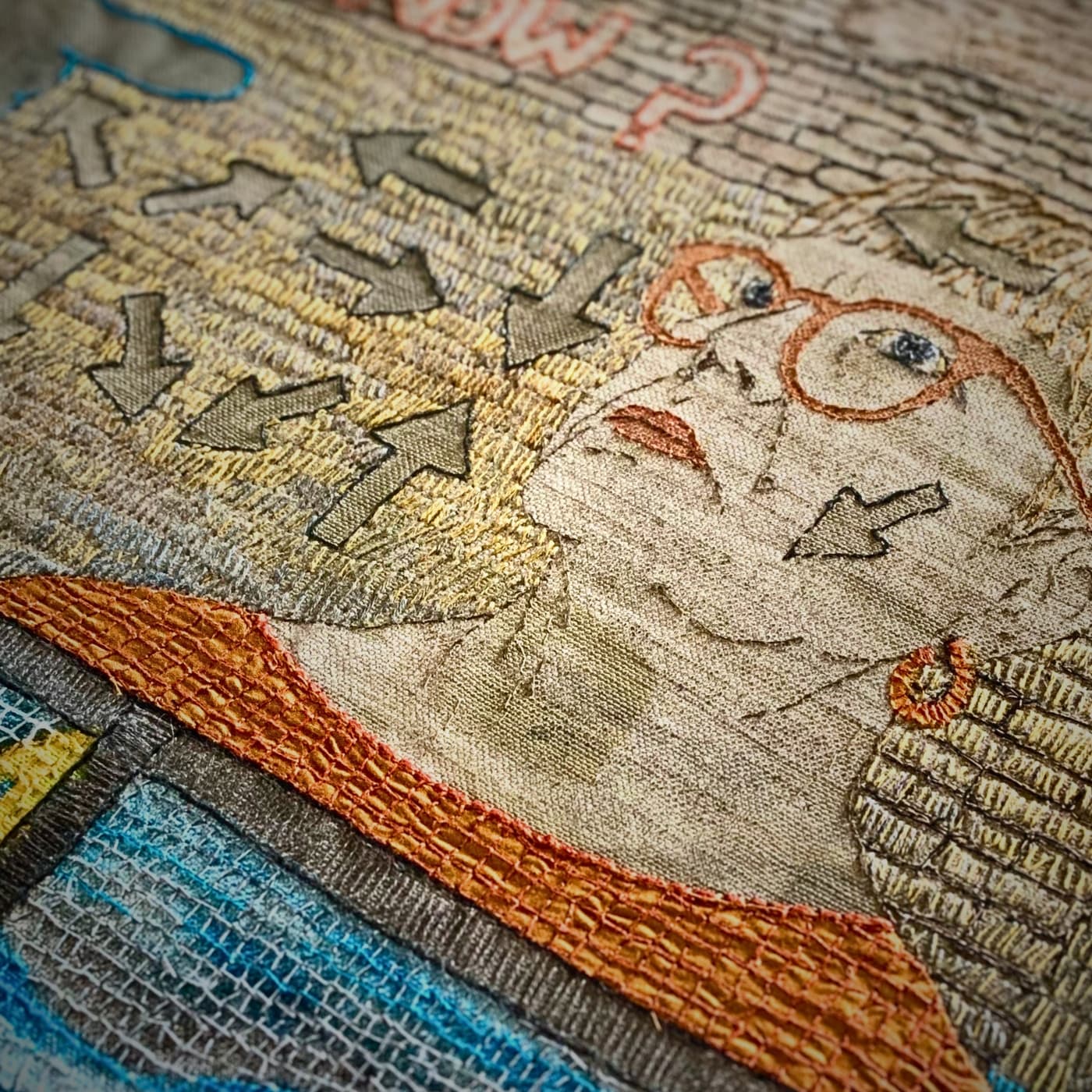
The Stuff of Nightmares evokes conflict, loss and chaos through layered textures, confronting viewers with haunting truths while revealing humanity’s fragility and resilience.
What I learned from these two works was that it’s hard not to reach for the paintbrush when you are used to the freedom of mixed media, but I really enjoyed the challenge of sticking to appliqué to add colour to the background.

Evolving ideas
Would you share a little about your process?
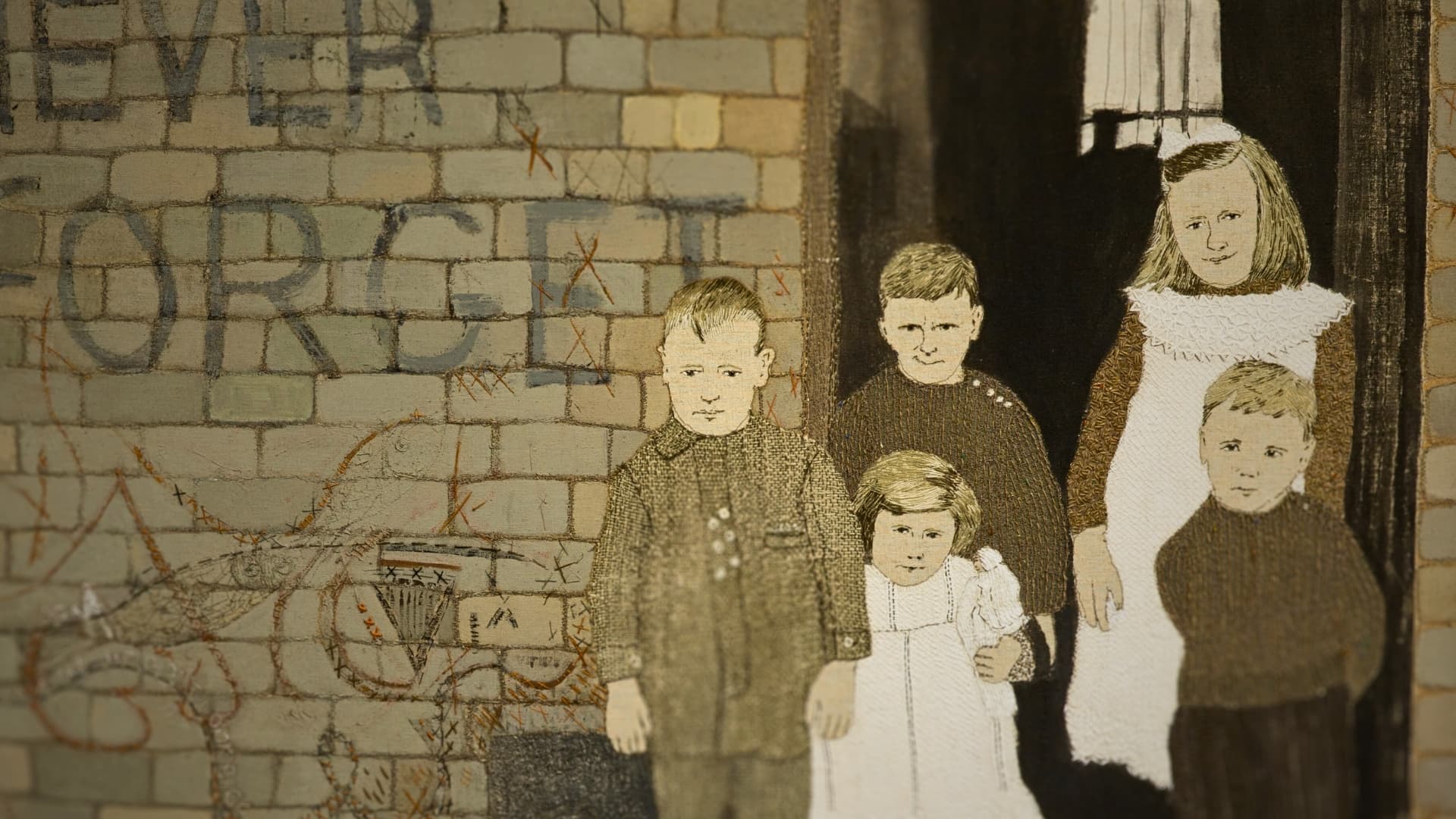
Most of my work evolves during a long, slow period with major pieces taking months, or even years, to come to fruition. There’s a lot of thinking, gathering images and sometimes making drawings. As I begin to develop an artwork, it often starts life on a computer screen. The computer helps me to experiment and save time; I can reduce a composition to a simple line drawing and print it out.
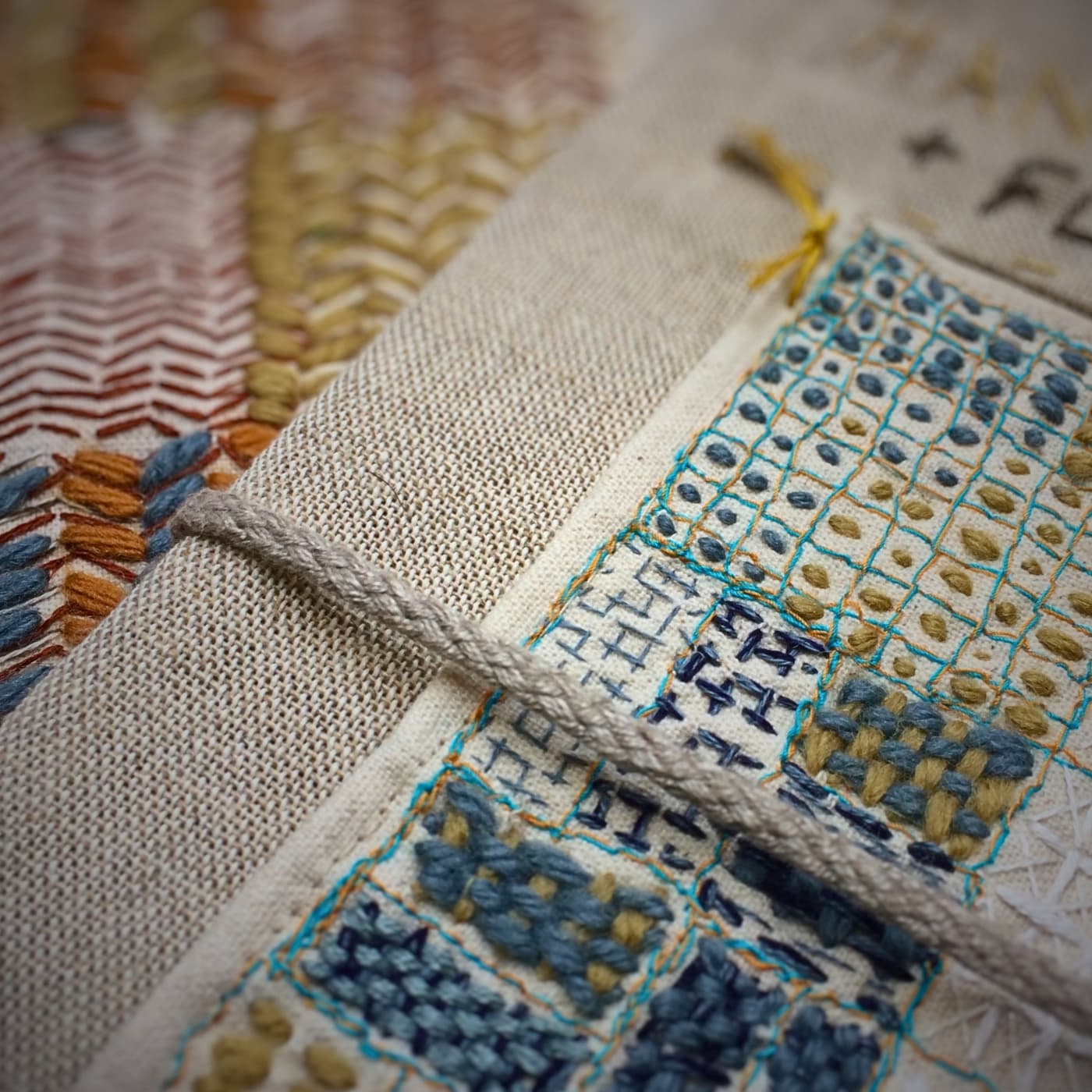
Other times, I’ll develop samples during the research stages of a project and often those become part of a final composition.
Then comes the exciting part, starting the stitching. My stitched drawings are done using free machine embroidery or hand stitch. And I use hand stitching to add details, pattern and texture.

Sketchbooks & samplers
How do you plan your work?
I use a sketchbook to record thoughts, images and ideas, as well as for drawing. Drawing becomes a means of problem-solving as well as a way to express ideas on paper. A sketchbook is also useful for working out colour schemes and making notes of fabrics and suppliers. And it’s the perfect place to store small stitched samplers that can be used or referred to in the future.
I sometimes show my sketchbooks alongside my finished work. Most people are interested to see the process behind the finished piece, and I hope it encourages others not to be too precious about the contents – a sketchbook is only a means to an end.
“I enjoy exploring displacement, a sense of belonging or not belonging…”
Sue Stone, Textile artist
Search out the unexpected
What inspires your work?
I look for the out-of-place, the unexpected and the bizarre. I am an avid photographer and use my photos to create a constant visual record, both at home and on my travels.
I enjoy exploring displacement, a sense of belonging or not belonging, often by taking figures from old family photographs and juxtaposed into a modern day scene such as beside the work of street artists in London’s East End.
A life story in portraits
Tell us about your long-running self-portrait series…
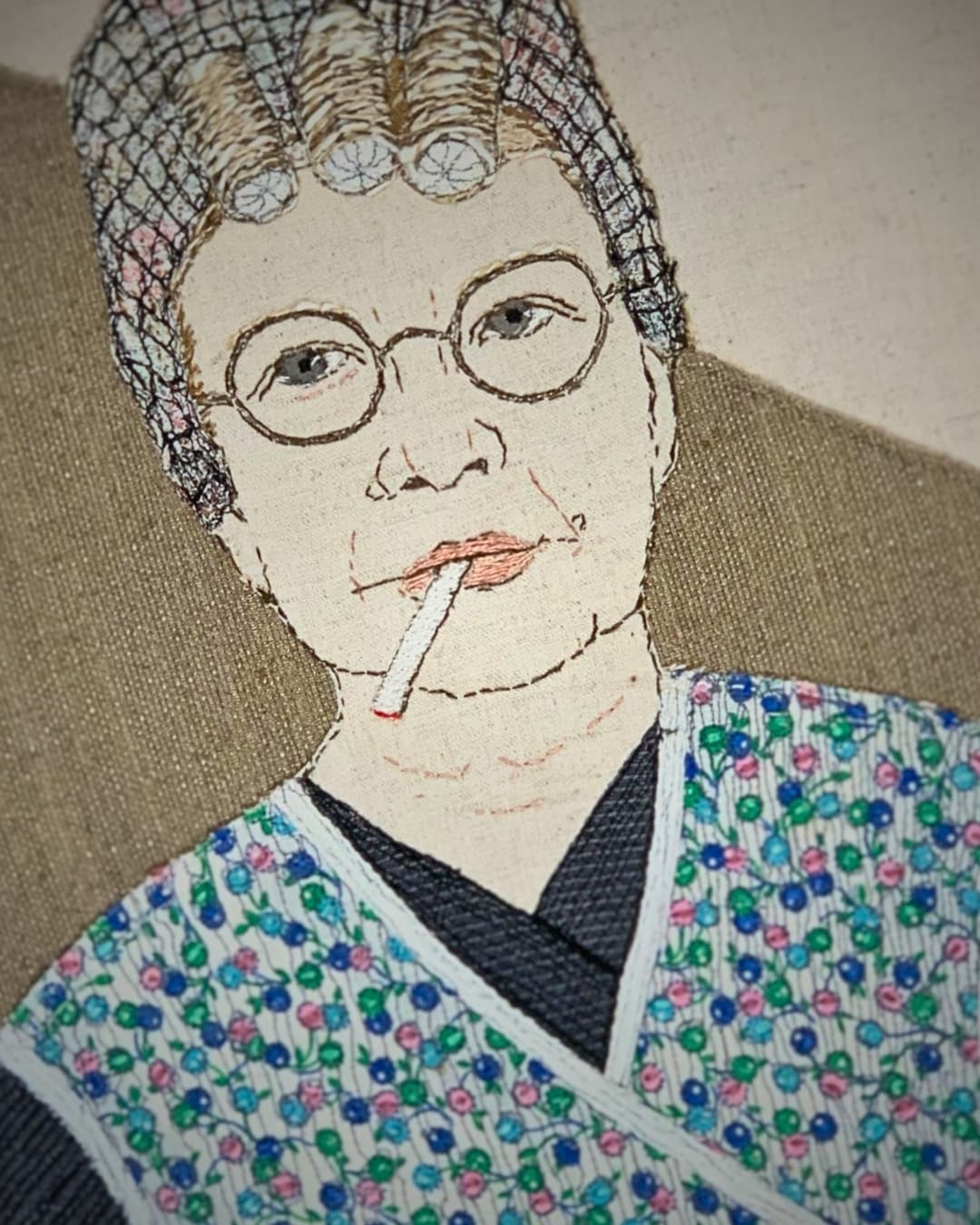
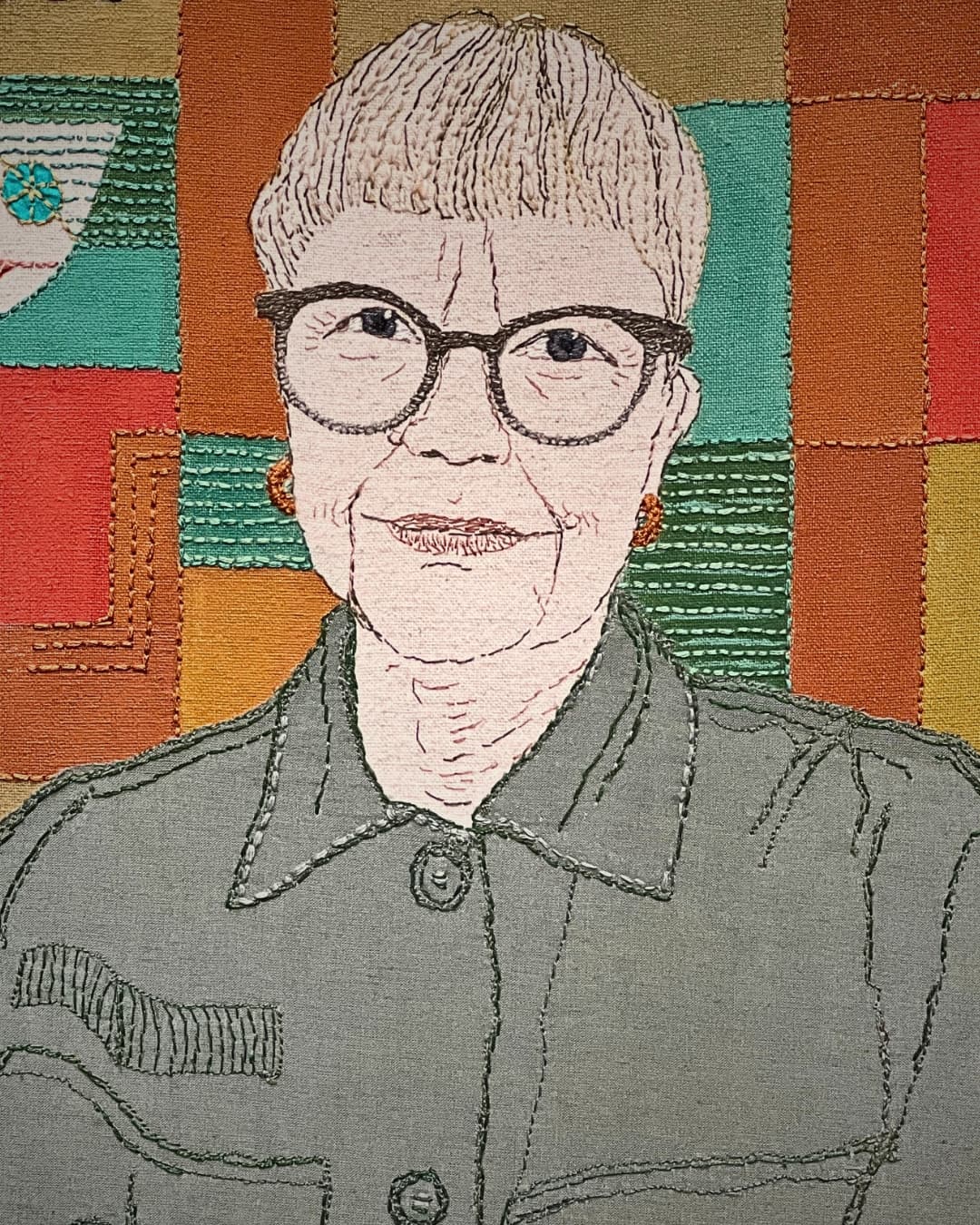
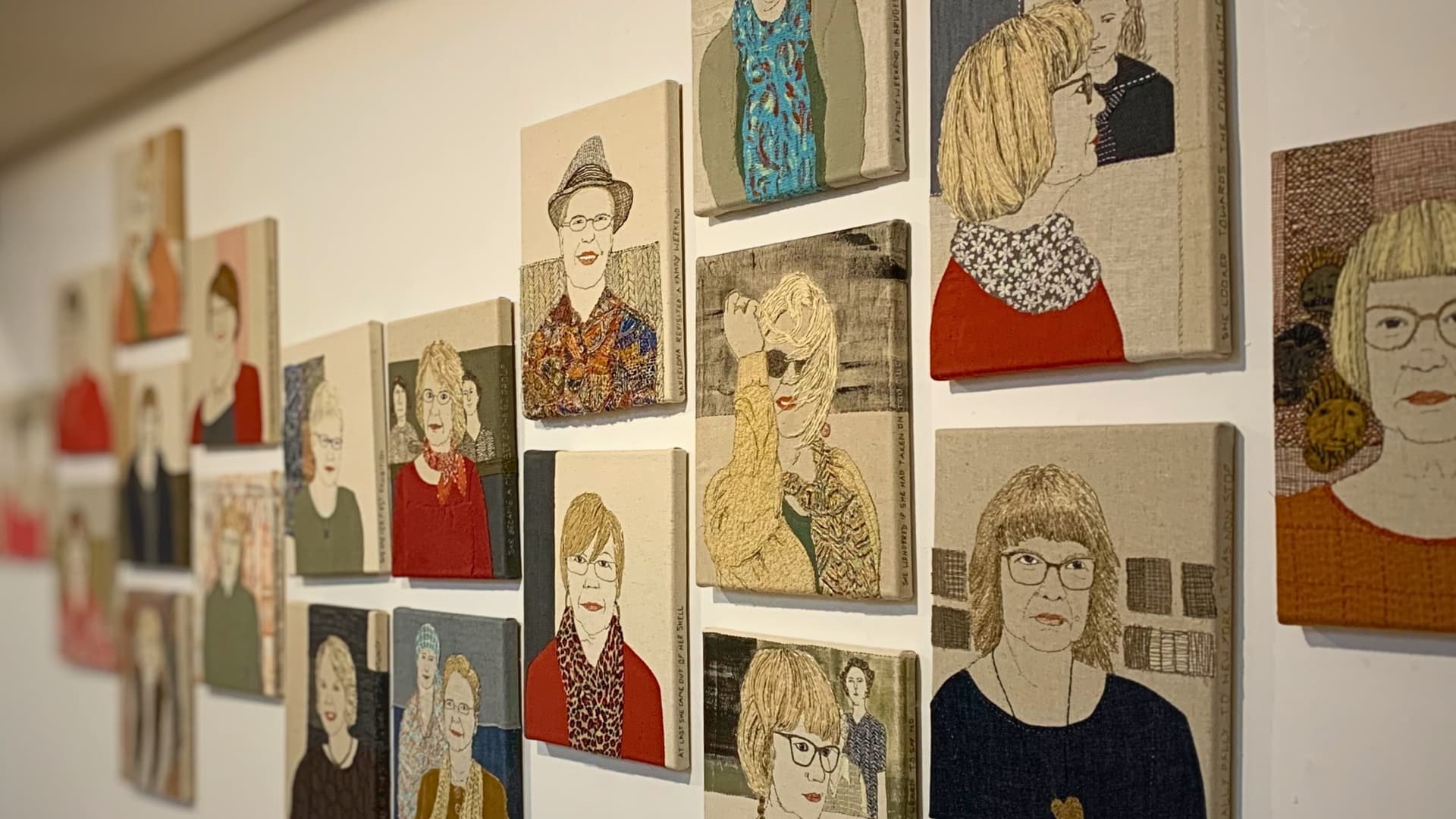
A Life Story began in 2015 when I was invited by my former tutor and mentor, Alf Ludlam, to create an unusual self-portrait for an exhibition at Grimsby Fishing Heritage Centre. With a six-metre wall to fill, I decided to make one portrait for each year of my life – then 63 in total.
My original plan was to pare everything back to simple line drawings, but my instinct for detail soon took over. By the exhibition deadline I had completed 42 portraits, each measuring 26cm x 30cm (10″ x12″), which were shown as a work-in-progress. I finished all 63 in 2016 and exhibited them at the Knitting & Stitching Shows in London, Dublin and Harrogate, before showing them again at several other venues.
Finding reference material for some portraits was difficult. My Dad’s photographs helped with early years, but many portraits came from memory, often sparked by clothes and hairstyles I remembered wearing.
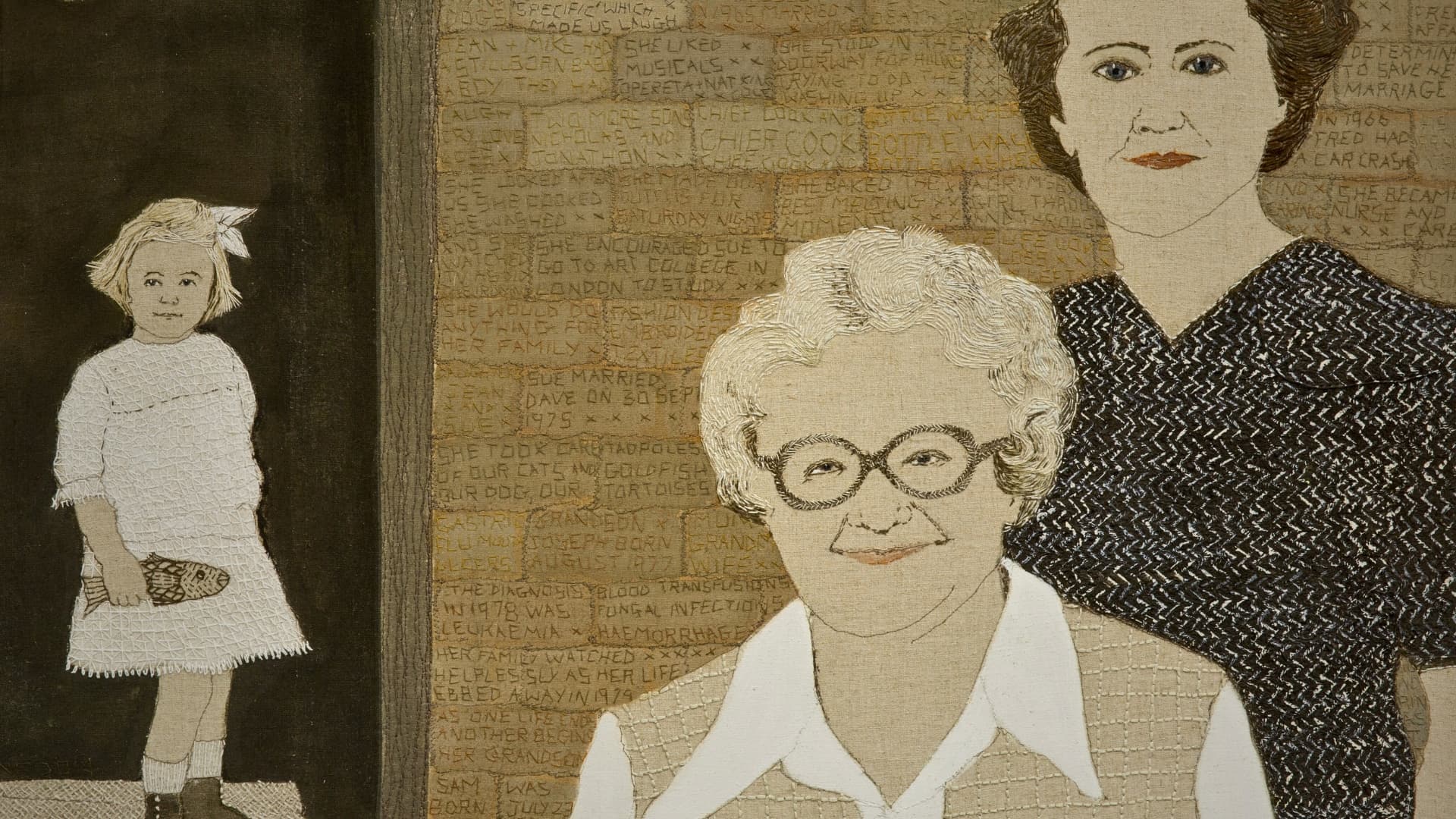
For me, A Life Story has become a companion as much as a body of work. It is a stitched autobiography, a record of who I have been and who I continue to become. It is flawed, imperfect, and unfinished – just like life itself. And as long as I can, I will keep stitching, adding one portrait at a time to the story of a life.
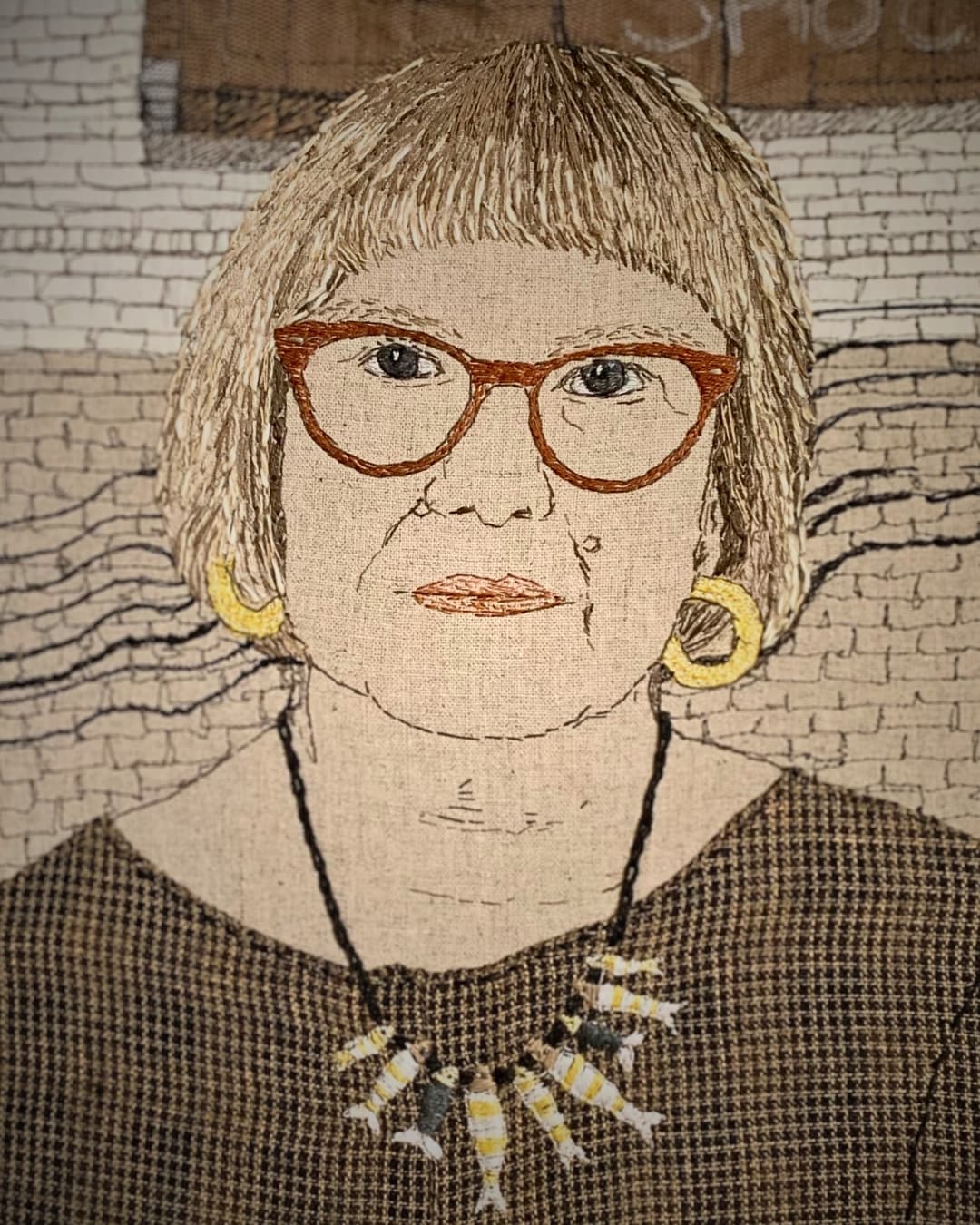

“A Life Story is a stitched autobiography, a record of who I have been and who I continue to become.”
Sue Stone, Textile artist
Art & family
Who were your early influences?
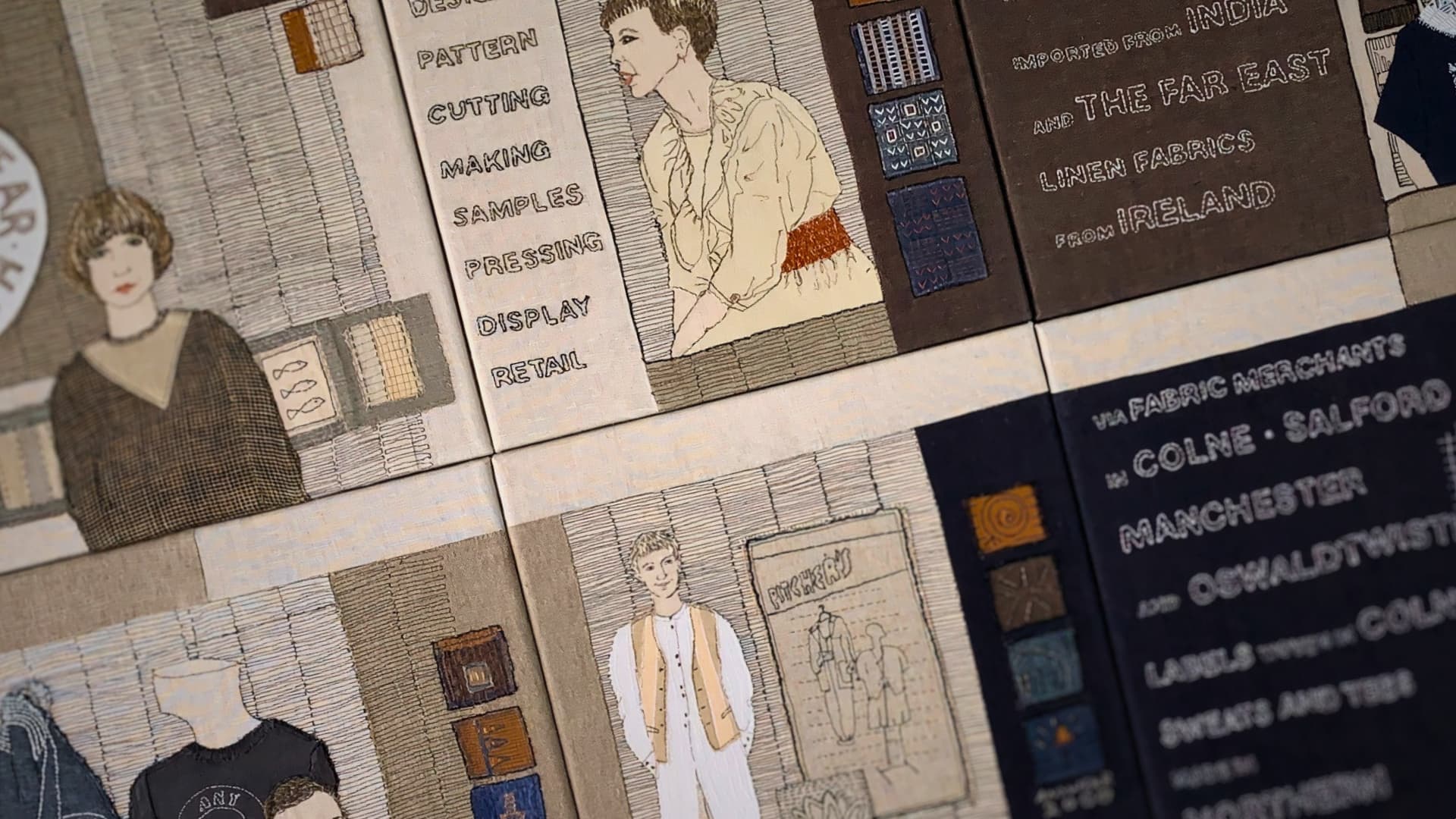
My earliest influences were my Dad who gave me my work ethic and the determination to succeed and my Mum, who was a tailoress. She taught me to use her Singer treadle sewing machine at about the age of six. From a very early age all I ever wanted to do was design and make clothes, first for my dolls and then for myself.
Mum was unfaltering in her support when I wanted to study at art school during a period when ‘grammar school girls didn’t really do that sort of thing’. My Dad was a Grimsby fish merchant during the 1950s and 1960s.
My art always has a connection to my own life or environment. This might be family and friends, time spent in London and on my travels, both at home and abroad, or something I’ve heard or experienced.
Embroidery as art
What was your route to becoming an artist?
In the 1970s, I studied fashion at St Martin’s School of Art (now UAL Central St Martins) and then textiles and embroidery at Goldsmiths College in London (now Goldsmiths, University of London), where I was taught by the pioneer textile artists Constance Howard, Christine Risley, and Eirian Short.
Constance Howard was a small charismatic person with bright green hair and the first time I met her she introduced herself as Mrs Parker. I had no idea who she was at the time, or of her importance in establishing textiles as an art form in the 20th century. She was just Mrs P, an inspiration to all her students who gave me my lifelong love of stitching.
Christine Risley was an inspirational teacher who taught machine embroidery and opened my eyes to the versatility of the sewing machine and the spontaneity you can get with free machine stitch.
Eirian Short introduced me to the 62 Group of Textile Artists in 1975, when I was first a member for a few years until other commitments got in the way of my stitching.
After art college I went into business and made a living from designing womenswear for 28 years. But I always knew I would return to stitching eventually, which I did in 2002 at the age of 50.
Telling textured stories
How has your work evolved over time?
When I returned to stitching in 2002, my work was purely decorative and mainly abstract. I eventually came to figurative, narrative work in 2005 when I made my first self-portraits. I got there via artworks featuring historic tiles, gargoyles and landscapes. My work soon became more figurative, humorous and surreal.
In more recent years I have experimented with scale and different ways to present my work, like wall hangings, modular work, assemblages and stretched work.
Which direction would you like to explore in the future?
In the future, I will definitely continue telling my stories and experiment with the layering of stitch and paint, which is a constant balancing act. I’ll use these simple techniques to find even more texture and pattern. I would also like to investigate using small stitched elements on larger soft backdrops. Maybe they will be easier to ship to exhibitions!
Nothing is impossible
What advice would you give to an aspiring textile artist?
Be true to yourself and use your own voice to say what you want to say.
Always strive to make your next piece better than your last. If you falter, turn up the next day and try again!
Be determined and persistent, and always remember my Dad’s maxim: ‘Nothing is impossible, the impossible just takes a bit longer’.

Comments